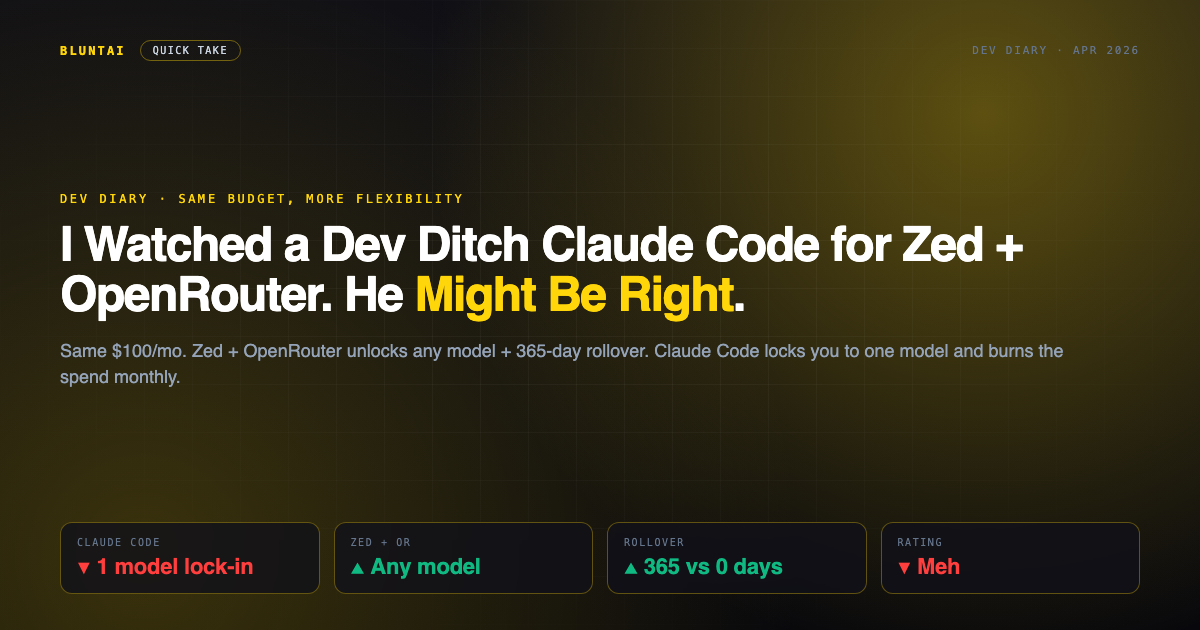
I Watched a Dev Ditch Claude Code for Zed + OpenRouter. He Might Be Right.
The Switch
His new setup:
| Before | After | |
|---|---|---|
| Editor | Claude Code | Zed ($10/mo) |
| AI backend | Claude (bundled) | OpenRouter ($90/mo) |
| Total | $100/mo | $100/mo |
| Model access | Claude only | Any model via OpenRouter |
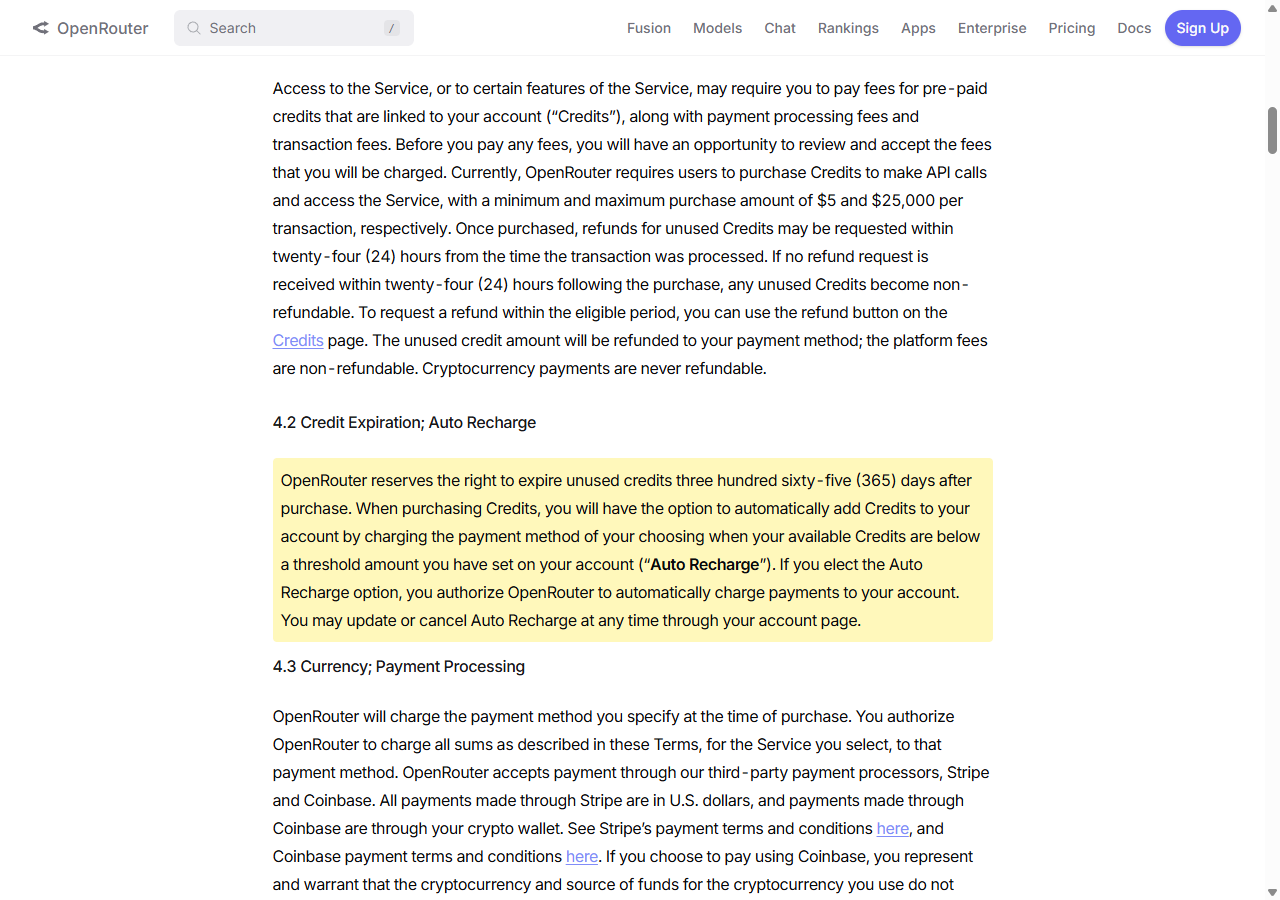
| Unused credits | Gone at month end | 365-day rollover |
The math is simple: same budget, more flexibility. OpenRouter gives you access to Claude, GPT-4, Gemini, Llama, and everything else through a single API. Credits roll over for a year instead of vanishing monthly. And Zed is a fast, native editor with built-in agent support.
Reality Check on Zed’s $10/month
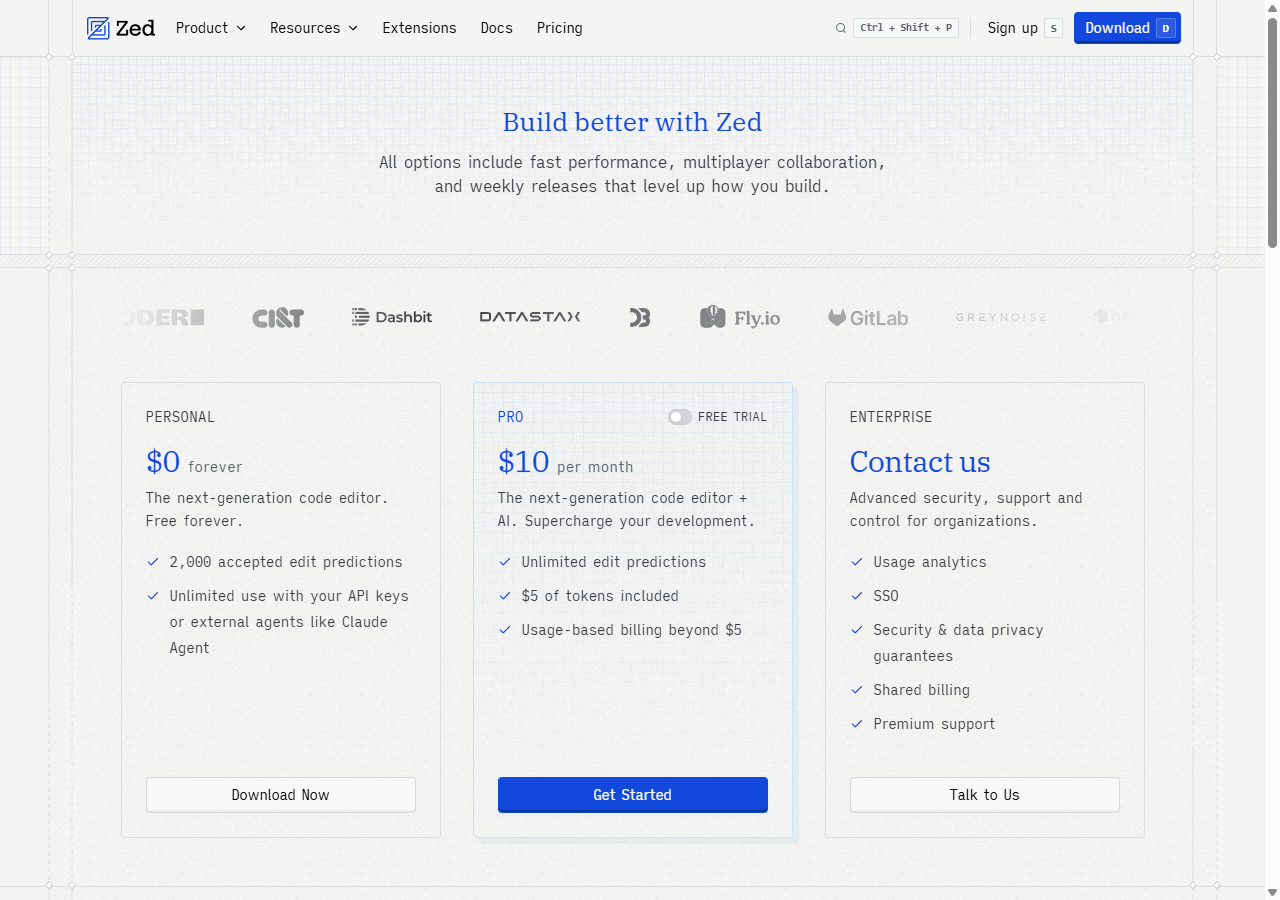
One nuance the dev’s math glosses over: Zed Pro at $10/month includes only $5 of token credit. Anything beyond that is metered usage at provider cost plus a 10% Zed markup. Active developers easily land at $20–$30/month on Zed alone, before you even touch OpenRouter. The “$10/mo editor” framing is the sticker price, not the bill.
Where He’s Right
The rollover argument is strong. If your usage is bursty — and most developers’ usage is — losing unused credits monthly is wasteful. OpenRouter’s 365-day rollover accommodates irregular patterns without penalty.
Model flexibility matters. Being locked to one provider is a risk. When Claude has a bad day (and it does), having a fallback is valuable. When a different model is better at a specific task, you want access to it.
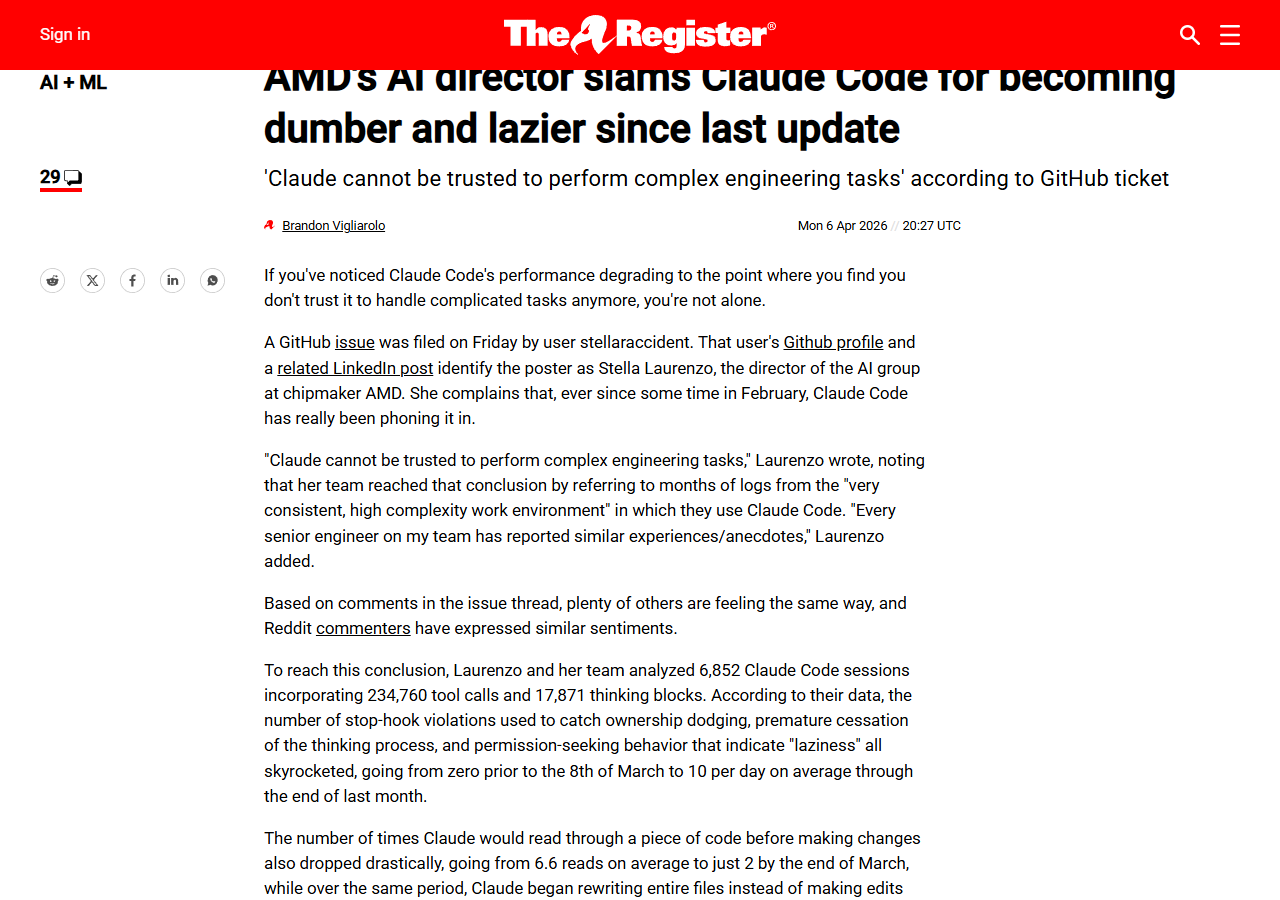
The frustration is real and widespread. This isn’t one angry developer. Stella Laurenzo, AMD’s senior director of AI, filed a public GitHub issue after her team analyzed 6,852 Claude Code sessions and concluded “Claude cannot be trusted to perform complex engineering tasks.” When enterprise users go on the record with that kind of data, you have a pricing and performance problem.
Where He’s Wrong
Zed’s agent isn’t Claude Code. Claude Code isn’t just an editor with AI autocomplete — it’s an autonomous coding agent that reads your codebase, runs commands, edits files, creates commits, and manages complex multi-step tasks. Zed’s agent features are improving but they’re not at the same level. You’re trading autonomy for flexibility.
OpenRouter adds a middleman. You’re now dependent on a third-party API aggregator for your AI access. That’s another point of failure, another company’s pricing changes to worry about, and potentially slower response times.
$90/month of OpenRouter isn’t $100/month of Claude Code. OpenRouter charges per token, not a flat subscription. $90 of pay-per-use might buy you less than you think, depending on how much context you’re sending. The “same budget” framing is misleading if your actual usage differs.
The Real Problem
This isn’t about Zed vs Claude Code. It’s about Anthropic’s pricing model not matching how developers actually work.
Most AI coding happens in bursts. You have a two-hour session where you’re shipping a feature and burning through tokens. Then nothing for six hours. Then another burst. A flat monthly subscription with hard rate limits punishes exactly this pattern.
The fix isn’t complicated: rollover credits, burst capacity, or pay-as-you-go pricing alongside the subscription. Anthropic has acknowledged the underlying engineering missteps. Whether they’ll fix it before more developers vote with their wallets is the real question.
Bottom Line
The Zed + OpenRouter setup is a legitimate alternative for developers who want model flexibility and predictable spending. It’s not a strictly better replacement for Claude Code — you lose the autonomous agent capabilities that make Claude Code special.
This is a “Meh” because the solution is a trade-off, not an upgrade. You’re solving the pricing problem by accepting a capability downgrade. That’s fine if pricing is your main pain point. It’s not fine if you actually need a coding agent.
Rating: Meh. The right move for budget-conscious developers. The wrong move if you need Claude Code’s agent features. And a warning sign Anthropic should take seriously.
All opinions expressed on BluntAI are editorial opinions based on publicly available information and personal testing. We may earn affiliate commissions from links on this site.

Disclaimer: BluntAI may earn affiliate commissions from links in this article. This never influences our reviews. We buy and test everything ourselves. Our opinions are brutally our own.