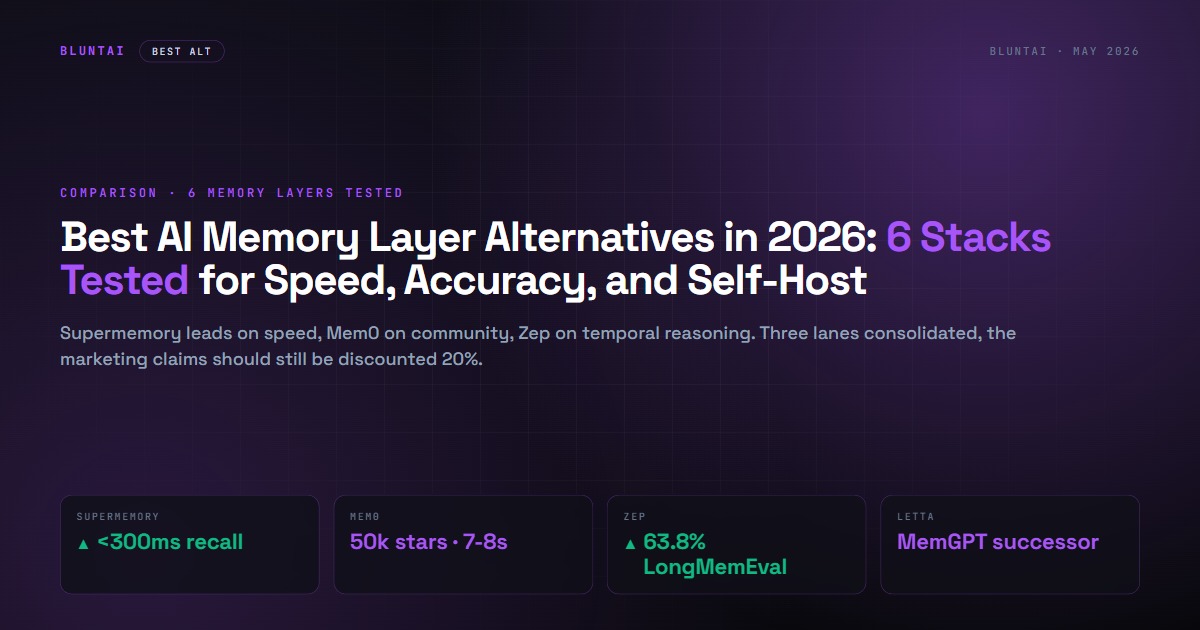
Best AI Memory Layer Alternatives in 2026: 6 Stacks Tested for Speed, Accuracy, and Self-Host
If your AI agent forgets what the user told it last week, the agent is broken. AI memory layers are the unglamorous infrastructure that makes “personalized” agents actually feel personal — storing user facts, learning preferences, surfacing context at the right moment. The space matured fast in 2026: Mem0 hit 50K GitHub stars, Zep’s Graphiti graph engine started winning on temporal reasoning benchmarks, Supermemory shipped sub-300ms recall in production at 100B tokens/month, and Letta (the production successor to MemGPT) raised a Series A.
We reviewed Supermemory in detail earlier this year. This article zooms out: six memory layers compared on benchmarks, recall speed, architecture, and unit economics. The winners depend on what you’re optimizing for — speed, accuracy, control, or compliance.
The 6 memory layers, ranked
1. Supermemory — the speed leader
What it is: A managed memory layer for AI applications. Sub-300ms recall at production scale (100B tokens/month). Auto-capture model decides what’s worth remembering. Detailed in our full review.
Pricing: Free, Pro $19/month, Scale $399/month. Overage at $0.01 per 1,000 tokens.
Where it wins: Recall speed (sub-300ms vs Zep’s ~200ms-4s and Mem0’s 7-8s). LongMemEval score 85.4% per their public benchmarks. Auto-capture means you don’t have to design a memory schema — you just feed in conversations and Supermemory decides what’s worth keeping.
Where it loses: The $19 → $399 pricing cliff (no middle tier). Self-hosting is “enterprise-only.” Less open than Mem0 if you care about owning the runtime.
Our take: Best pick when speed and minimal-config matter more than infrastructure ownership. The Pro tier is the cheapest production-grade option in the category.
Rating: Solid, no drama.
2. Mem0 — the open-source heavyweight
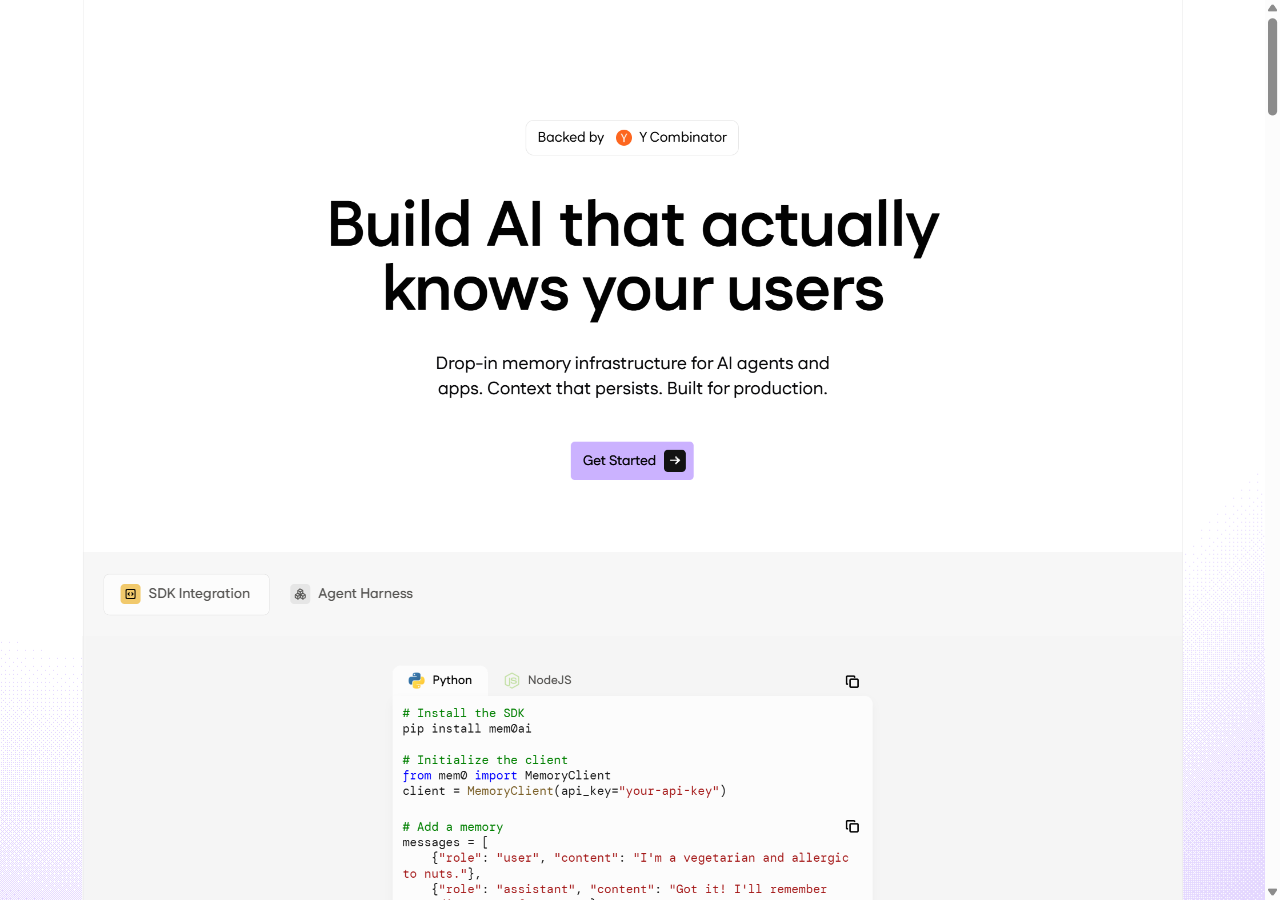
What it is: Y Combinator-backed memory infrastructure for AI agents and apps. 50K+ GitHub stars, Apache 2.0, the largest open-source memory community in the category. Drop-in SDK in Python and Node.
Pricing: Open source core (free, self-hosted). Mem0 Cloud for managed deployment with Free, Starter ($19/mo), and custom Enterprise tiers.
Where it wins: Community size (~3× Supermemory and Zep on GitHub stars). Compliance posture — the open-source variant means you can run Mem0 entirely inside your VPC, important for healthcare and finance use cases. Fine-grained control over what gets remembered (rules-based memory, session-scoped memory, user-level memory). Most third-party tooling integrations of any memory layer.
Where it loses: Recall speed lags badly — 7-8 seconds in independent benchmarks vs Supermemory’s sub-300ms. LongMemEval score around 49% with GPT-4o (vs Zep at 63.8% and Supermemory at 85.4%). The “drop-in” framing is honest until you actually deploy at scale and discover that retrieval latency dominates your perceived agent speed.
Our take: Mem0 wins on community and self-host story, loses on raw performance. If you have strict data residency or compliance requirements, the open-source path here is worth the speed penalty. For consumer-facing apps where 7-second waits feel broken, look elsewhere.
Rating: Solid, no drama (for self-host / compliance use cases).
3. Zep — the temporal reasoning specialist
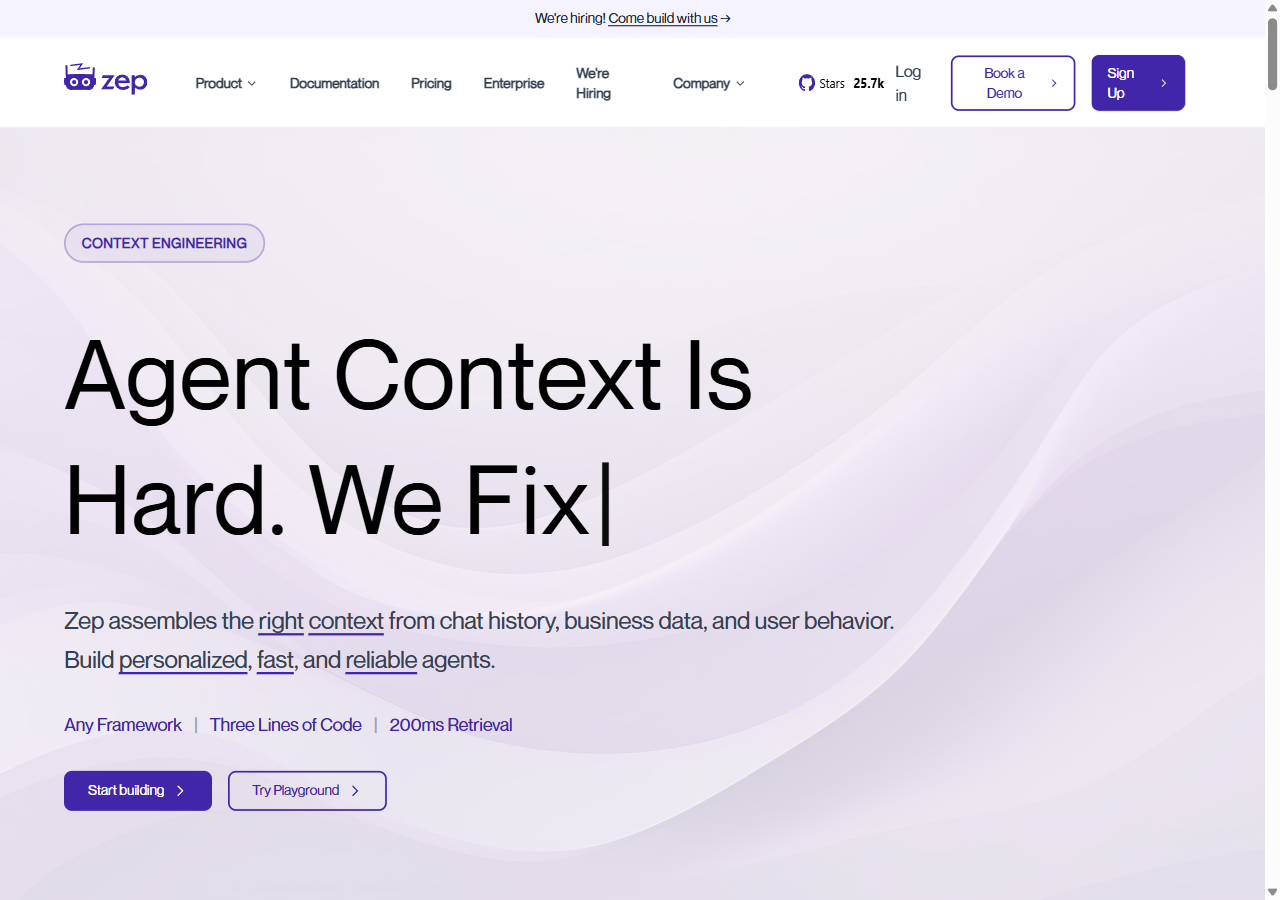
What it is: A “context engineering” platform built around Graphiti, an open-source temporal knowledge graph. Instead of storing facts as timestamped snapshots, Zep tracks validity windows — when a fact was true, when it was superseded, what changed. 25.7K GitHub stars.
Pricing: Open source core (Apache 2.0). Zep Cloud at Free, Plus ($24/mo), and Enterprise tiers.
Where it wins: Temporal reasoning. Zep scores 63.8% on LongMemEval with GPT-4o vs Mem0’s 49% — a 15-point gap driven by the temporal graph architecture. If your agent needs to know when a fact became true, not just whether it’s true now, Zep is the only major option that handles this natively. 200ms retrieval (per their site) — competitive with Supermemory.
Where it loses: Smaller community than Mem0. The graph paradigm has a steeper learning curve — you’re not just storing strings, you’re modeling fact-time relationships. Cloud pricing is reasonable, self-host requires running both Graphiti and a graph database (Neo4j typically).
Our take: If your use case has time-sensitive facts — “Sarah moved teams in March, her old manager was Bob, her new manager is Lisa” — Zep’s graph model wins decisively. For simpler personalization, Mem0 or Supermemory are easier to ship.
Rating: Shut up and try it (for temporal use cases).
4. Letta — the MemGPT successor
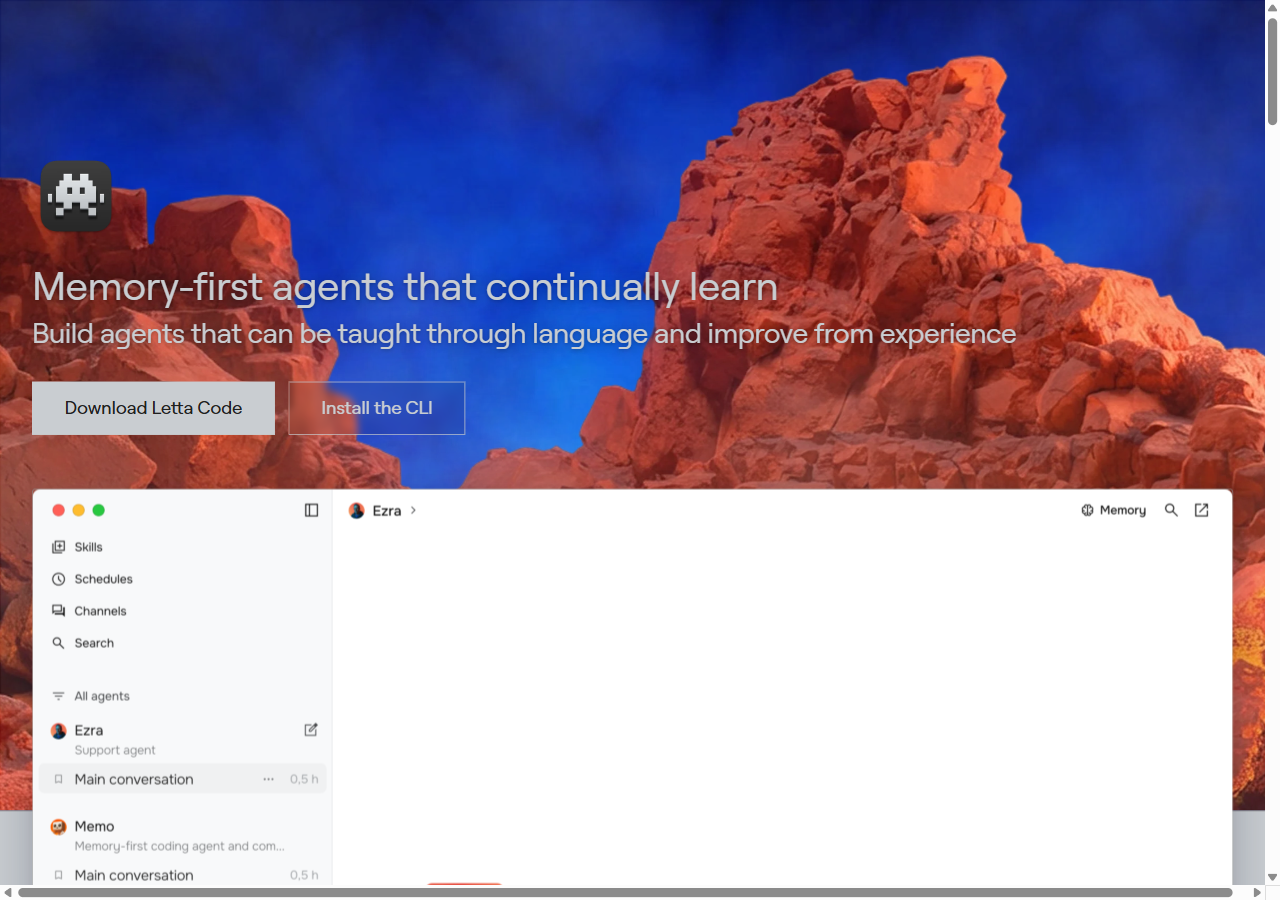
What it is: The production-focused descendant of MemGPT, the 2023 academic paper that introduced “self-editing memory” for LLMs. Letta lets agents continually learn from experience — the agent decides what to remember, when to summarize, and when to forget. Series A funded.
Pricing: Open source server (Apache 2.0). Letta Cloud for hosted with Free and paid tiers (pricing on request for production).
Where it wins: The “agent that teaches itself” paradigm. Unlike Mem0/Zep/Supermemory which are libraries you call, Letta gives you a stateful agent runtime that owns its own memory schema. Best fit when the agent’s personality and learned behaviors are the product, not just the conversation history.
Where it loses: Younger ecosystem than Mem0 (less third-party tooling). The “self-editing memory” model is more opinionated — you’re committing to Letta’s architecture, not just plugging in a memory primitive. Less obvious unit economics — the agent’s continuous self-learning consumes tokens you may not have budgeted.
Our take: Letta is the right pick when the agent’s identity and learned skills are the product (personal AI assistants, education tutors, long-running analyst agents). For drop-in chat memory on top of an existing app, Mem0 or Supermemory are simpler.
Rating: Solid, no drama (for memory-first agents).
5. Supabase pgvector / DIY — the build-it-yourself option
What it is: Postgres + pgvector + your own retrieval logic. Not a memory product per se — the building blocks. You design the schema, write the retrieval queries, decide what to embed and what to summarize. Same shape as RAG but tuned for conversational memory.
Pricing: Postgres-cheap. Supabase Free tier handles 500MB vector data. Pro at $25/mo. Self-host on RDS or any managed Postgres.
Where it wins: Total control. You own the data, the schema, the eviction policy, the embedding choice. No vendor lock-in. Free if you have a database already. Supabase tooling (auth, RLS, realtime) makes the surrounding app simpler too.
Where it loses: Engineering time. You’re rebuilding what Mem0/Zep/Supermemory ship out of the box. Performance is your problem — if your retrieval is slow, you debug it. Benchmark scores are whatever you can extract via tuning, which is typically below the specialist products.
Our take: Pick this only if memory is not your bottleneck and you have specific compliance/architecture reasons to own it end-to-end. Most teams trying to “just use Postgres” end up reinventing Mem0 badly. The trade is real, but the time cost is usually higher than the licensing fee.
Rating: Meh (unless you have a real reason to DIY).
6. LangChain / LangGraph Memory Primitives — the framework-bundled option
What it is: Memory primitives bundled with the LangChain / LangGraph framework. ConversationBufferMemory, VectorStoreRetrieverMemory, SemanticCache, plus the new LangGraph state-checkpointing model. Memory as part of the agent runtime, not a separate service.
Pricing: Open source. You pay for the underlying vector store (Pinecone, Weaviate, Chroma, etc.) and any LangSmith observability you opt into.
Where it wins: Zero extra dependency if you’re already on LangGraph. State checkpointing in LangGraph means your “memory” is just a typed state object that auto-persists. For workflow-shaped agents (ReAct, plan-and-execute), this is the right level of abstraction.
Where it loses: Not built for “remember user preferences over months” — built for “remember the current conversation and recent task state.” For long-term personalization you’d still bolt on Mem0/Supermemory underneath. The memory primitives evolve fast and old code rots fast (we covered this in our agent frameworks roundup).
Our take: Use LangGraph state for short-term agent context. Pair with a dedicated memory layer (Mem0, Zep, Supermemory) for cross-session personalization. They solve different problems.
Rating: Solid, no drama (for short-term state, not long-term memory).
At-a-glance comparison
| Best at | Recall speed | LongMemEval | License | Self-host | |
|---|---|---|---|---|---|
| Supermemory | Speed, simplicity | <300ms | 85.4% | Closed core | Enterprise only |
| Mem0 | Community, compliance | 7-8s | ~49% | Apache 2.0 | Yes |
| Zep | Temporal reasoning | ~200ms | 63.8% | Apache 2.0 | Yes (+Neo4j) |
| Letta | Memory-first agents | Variable | N/A | Apache 2.0 | Yes |
| Supabase pgvector | Total control | You tune it | You tune it | PostgreSQL | Yes |
| LangGraph state | Short-term context | In-memory | N/A | MIT | Yes |
How to pick
You need fast personalization for a consumer chat product. Supermemory Pro. $19/mo, sub-300ms recall, no schema design required.
You have data residency or compliance constraints. Mem0 self-hosted. Apache 2.0 means full audit trail and your VPC.
Your agent needs to know when facts were true. Zep with Graphiti. Temporal graph is unique in this category.
Your agent’s identity and learned skills are the product. Letta. Memory-first runtime fits the use case.
You want total control and have engineering time to spend. Supabase pgvector + your own retrieval logic. Cheapest at scale, expensive in dev hours.
You’re already on LangGraph and need short-term state. LangGraph state checkpointing. Don’t add another service for this.
The Blunt takeaway
The memory layer market split into three lanes in 2026: speed-optimized managed (Supermemory), community-driven open source (Mem0), and specialized graph-based (Zep). Letta is its own category — agent runtime, not memory primitive.
The benchmark wars in this space are tiresome and the marketing claims should all be discounted by 20%. What we’ve seen in production:
- Supermemory’s speed is real and the unit economics work for chat products at scale.
- Mem0’s compliance story is real and saves you weeks of legal review for regulated deployments.
- Zep’s temporal graph is genuinely useful for time-sensitive agents (sales CRMs, customer histories) but overkill for everything else.
- Letta is the right fit for a narrow use case (long-running, identity-bearing agents) and the wrong fit for everything else.
If your agent forgets what the user said yesterday, you don’t have a model problem. You have a memory layer problem. Pick one of these, ship it, iterate.
Related on BluntAI
All opinions expressed on BluntAI are editorial opinions based on publicly available information and personal testing. Pricing data current as of May 2026. We may earn affiliate commissions from links on this site.
Disclaimer: BluntAI may earn affiliate commissions from links in this article. This never influences our reviews. We buy and test everything ourselves. Our opinions are brutally our own.